Hey there! I’m a supplier of ultrafiltration membranes, and I often get asked about what the quality standards for these membranes are. In this blog, I’m gonna break it all down for you in a way that’s easy to understand. Ultrafiltration Membrane
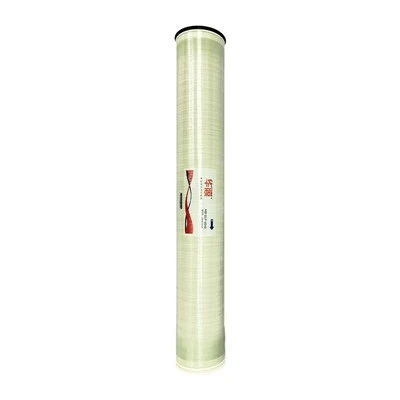
1. Pore Size and Distribution
One of the most crucial aspects of an ultrafiltration membrane is its pore size. Ultrafiltration membranes typically have pore sizes ranging from 0.001 to 0.1 micrometers. This size range allows them to effectively separate particles such as bacteria, colloids, and large macromolecules from a solution.
The pore size distribution is also super important. A membrane with a narrow pore – size distribution is generally better. Why? Well, if the pores are all around the same size, it ensures more consistent filtration performance. For example, if you’re using the membrane to remove bacteria from water, a narrow pore – size distribution means that almost all bacteria will be blocked, and you won’t have any sneaking through due to larger pores.
We test the pore size and distribution of our membranes using advanced techniques like scanning electron microscopy (SEM) and atomic force microscopy (AFM). These methods give us a clear picture of what the membrane surface looks like at the microscopic level, so we can make sure it meets the required standards.
2. Permeability
Permeability is another key quality factor. It refers to how easily a fluid can pass through the membrane. In simple terms, a more permeable membrane means you can process more fluid in less time.
There are a few things that can affect membrane permeability. The material the membrane is made of is a big one. For instance, some polymers are more porous and allow for better fluid flow than others. The thickness of the membrane also plays a role. A thinner membrane usually has higher permeability, but it also needs to be strong enough to withstand the operating pressure.
We measure the permeability of our membranes in the lab by performing filtration experiments. We calculate the flux, which is the volume of fluid that passes through the membrane per unit area per unit time. A high – flux membrane is usually more desirable, but you also have to balance it with other factors like rejection rate.
3. Rejection Rate
The rejection rate is a measure of how well the membrane can block certain components in a solution. For example, if you’re trying to remove proteins from a mixture, the rejection rate tells you what percentage of the proteins are actually stopped by the membrane.
This is typically expressed as a percentage. A high rejection rate is what we’re aiming for when it comes to the target components. But it’s not always as simple as just getting the highest rejection possible. Sometimes, you might want to let some smaller molecules through while blocking larger ones.
We test the rejection rate by analyzing the feed solution (the solution before filtration) and the permeate (the solution that passes through the membrane) using techniques like high – performance liquid chromatography (HPLC) or UV – Vis spectroscopy. This gives us accurate data on what’s being removed and what’s getting through.
4. Chemical and Mechanical Stability
Ultrafiltration membranes often operate in harsh chemical and physical environments. So, they need to be chemically and mechanically stable.
Chemical stability means the membrane can withstand exposure to different chemicals without degrading. For example, if the membrane is used in a water treatment plant that uses chlorine to disinfect the water, it needs to be resistant to the corrosive effects of chlorine. We test the chemical stability of our membranes by immersing them in various chemical solutions for a certain period and then checking for any changes in their properties like flux or rejection rate.
Mechanical stability is all about the membrane’s ability to withstand physical stress. This includes pressure during the filtration process, as well as any handling or installation. A membrane that’s too brittle will break easily, while one that’s too flexible might deform under pressure. We conduct tests to measure the tensile strength and elongation of our membranes to ensure they can handle the mechanical demands of the application.
5. Cleanability
Over time, ultrafiltration membranes can get fouled. Fouling is when particles, colloids, or other substances accumulate on the membrane surface or inside the pores, which reduces the membrane’s performance.
That’s why cleanability is an important quality standard. A good ultrafiltration membrane should be easy to clean. There are different cleaning methods, such as backwashing (pumping the fluid in the opposite direction to dislodge the fouling materials) and chemical cleaning (using specific chemicals to dissolve the fouling substances).
We design our membranes to be highly cleanable. We test the cleanability by fouling the membrane under controlled conditions and then trying different cleaning methods. We measure the recovery of the membrane’s flux after cleaning to see how effective the cleaning process is.
6. Long – term Performance
Finally, the long – term performance of the ultrafiltration membrane is crucial. A membrane that performs well in the short term but quickly deteriorates isn’t worth much.
We conduct long – term tests on our membranes. These tests can last for months or even years, depending on the application. We monitor the membrane’s flux, rejection rate, and other properties over time to make sure it maintains its performance.
In real – world applications, factors like the quality of the feed solution, the operating conditions, and the cleaning frequency can all affect the long – term performance of the membrane. But by using high – quality materials and advanced manufacturing processes, we aim to produce membranes that can provide reliable performance over an extended period.
The Bottom Line
When it comes to choosing an ultrafiltration membrane, these quality standards are what you need to look out for. As a supplier, we’re committed to producing membranes that meet or exceed these standards. We use state – of – the – art manufacturing techniques and rigorous quality control processes to ensure that every membrane that leaves our facility is of the highest quality.
If you’re in the market for ultrafiltration membranes and want to learn more about how our products can meet your needs, don’t hesitate to reach out. We’d be more than happy to have a chat with you about your specific requirements and see how we can help. We’re here to provide you with not just great products but also the support and expertise to make your filtration processes as efficient and effective as possible.
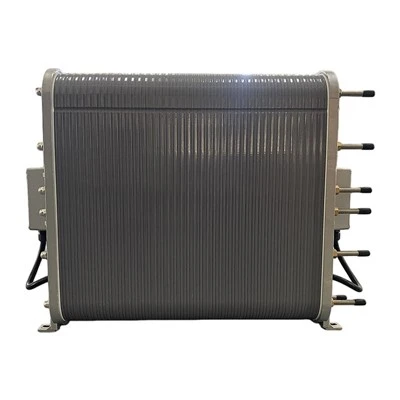
Compact EDI Modules So, if you’re interested in purchasing ultrafiltration membranes or just want to have a discussion about them, get in touch. We look forward to hearing from you and working together to find the perfect membrane solution for your application.
References
- "Membrane Science and Technology" by R. W. Baker
- "Handbook of Membrane Separations: Chemical, Pharmaceutical, Food, and Biotechnological Applications" edited by A. G. Fane and S. Suzuki
- Journal articles on ultrafiltration membrane research from "Journal of Membrane Science" and "Desalination"
Fujian Huamo Technology Co., Ltd.
Fujian Huamo Technology Co., Ltd. is one of the most professional ultrafiltration membrane manufacturers and suppliers in China, featured by quality products and good service. Please rest assured to wholesale the best ultrafiltration membrane made in China here and get price list from our factory. Contact us for custom service and OEM service.
Address: No.6 Hengtong Rd, Shanmei Village, Xiamei Town, Nanan City, Fujian Province, China
E-mail: info@huaromembrane.com
WebSite: https://www.hmromembrane.com/
