If you’ve ever settled into a weekend afternoon with a book, a cold drink, or a show after a long week, you’ve probably found yourself thinking: “This chair is perfect.” But what makes it perfect, exactly? As a leisure chair supplier who’s spent 12 years designing, testing, and refining seating for homes, offices, and outdoor spaces, I can tell you it’s rarely just the fabric or the color. It’s the little, unassuming detail that keeps you relaxed for hours without aches or fidgeting: the seat height. Leisure Chair

I first learned this lesson early in my career, back when I was working in a small workshop with a handful of upholsterers. We’d built a batch of recliners for a local furniture store, and within a month, half of them were being returned. Customers said their knees hurt after 20 minutes, or they felt like they were sliding forward, or they had to prop a pillow under their legs to be comfortable. I was confused—we’d followed the standard measurement we’d found in a 10-year-old industry manual. Turns out, that “standard” was a one-size-fits-all number that didn’t account for real people. That mistake led me to dig into the science of seating, talk to physical therapists, and test dozens of seat heights on people of all shapes, sizes, and needs. Today, that lesson is the backbone of every leisure chair we build, and it’s the core of what makes a chair “good” for long, unhurried moments.
Let’s start with the basics: what is seat height, exactly? For anyone who’s not in the furniture industry, it’s the vertical distance from the floor to the top of the seat cushion, not including the backrest or any pillows. It’s a simple number, but it interacts with your body in ways that most people don’t notice until it’s wrong. Think about when you sit down for dinner at a restaurant: a table that’s too low makes you hunch, too high means your elbows are awkwardly perched. The same logic applies to your leisure chair, except you’re sitting for hours, not minutes.
There’s a common myth that the “correct” seat height is 18 inches from the floor. I’ve heard that so many times from customers and even other furniture makers, but that’s a rough average, not a rule. Let’s break down the science behind why that number works for some and fails for others. The key here is pelvic angle and knee flexion—two things that go hand-in-hand with comfort. When you sit, your knees naturally bend at an angle. For casual leisure (not formal dining or office work), that angle should be between 90 and 110 degrees. Why? A 90-degree bend aligns your hips and knees, takes pressure off your lower back, and keeps your hamstrings relaxed. If your knees bend more than 110 degrees, your thighs tilt forward, which can pinch blood vessels behind your knees and leave you numb after a while. If your bend is less than 90 degrees, your hips end up higher than your knees, which forces your lower back to curve unnaturally forward (what physical therapists call an anterior pelvic tilt) and leads to back pain over time.
Calculating that angle for a specific person means measuring their seated knee height. That’s not as complicated as it sounds. If you want to get a rough idea, sit on a hard, flat surface (like a kitchen counter or a wooden bench) with your feet flat on the floor, knees bent at 90 degrees. Measure the distance from the floor to the underside of your thigh, right where your leg connects to your hip. That number is your baseline. A good leisure seat height should be about 1 to 2 inches lower than that measurement. Wait—let me explain why. The 1-inch gap allows for the softness of the cushion. A firm cushion will compress slightly when you sit, so if your baseline is 16 inches, a seat height of 15 to 15.5 inches will hit that 90-110 degree knee angle perfectly once you settle in. If you went exactly 16 inches, the cushion would compress a half-inch or so, leaving you with a seat height of 15.5 inches, which would make your knees bend too much. That’s why the 18-inch myth is so misleading—if a 6-foot-tall person has a seated knee height of 20 inches, an 18-inch seat would leave their knees bent at a sharp, uncomfortable angle. Conversely, a 5-foot-tall person with a 14-inch knee height would be stuck with knees bent only 70 degrees in an 18-inch seat, leading to back strain.
Now, that’s the science for a standard, upright leisure chair. But here’s the thing: leisure chairs aren’t one-size. You might want a chair that leans back for napping, an outdoor lounge chair for the patio, a compact accent chair for a small living room, or a heavy-duty chair for someone who’s larger than average. Each of these needs a slightly adjusted seat height, and ignoring that distinction is how you end up with a chair that looks good in the showroom but fails in the living room.
Let’s talk about reclining leisure chairs, for example. These are the most popular type for casual use, and their seat height is non-negotiable for comfort. When the chair is in the upright position (the position you use for reading or watching TV), it needs to follow that 90-110 degree knee rule. But when you recline back, the seat tilts forward a little, right? That changes the effective seat height. If you build a recliner with a seat height that’s perfect upright, it will drop too low when you lean back, leaving your knees bent so far your feet might not even reach the floor. That’s why we test our recliners at three positions: upright, 45 degrees, and fully reclined. For a standard recliner, the upright seat height is 16 inches for a medium build, and when you lean back, the tilt adds 0.5 to 1 inch, so at full recline, the effective height is 15 to 15.5 inches. That keeps your knee angle at a relaxed 100 degrees even when you’re flat, which is exactly what you want for napping.
Outdoor leisure chairs have their own set of rules. Most outdoor spaces are a little more casual, and many people like to prop their feet up on a ottoman or the arm of the chair. But even there, seat height matters. If your outdoor lounge chair is too low (under 14 inches), you’ll find yourself leaning way back to reach anything, and it’s harder to get up when you’re done sitting. If it’s too high (over 17 inches), it feels stiff and formal, not like the relaxed patio chair you want for a barbecue. For outdoor chairs, we stick to a range of 14 to 16 inches for most people, but we also offer adjustable-height options for people who use wheelchairs or have mobility issues. That’s a detail most suppliers overlook, but to us, a good leisure chair is accessible, too.
Then there are chairs for people who don’t fit the “average” mold. I’ve had customers come to us saying they’ve ordered chairs online that are way too small for their size, leaving their legs dangling off the edge. For larger adults, a seat height of 17 to 19 inches is ideal. That keeps their knee angle at a comfortable 95 to 100 degrees, even with their longer thigh length. For shorter adults (under 5’4”), a seat height of 13 to 15 inches is better, so their feet can reach the floor without scrunching their knees up to their chest. We learned this after a customer who’s 5’1” told us she’d spent years sitting on cushions in other people’s chairs because standard height made her knees hurt. When we adjusted her custom chair to 14 inches, she sent us a photo a week later, curled up with her book, and said it was the first time she’d sat in a chair for more than an hour without shifting. That’s the kind of feedback that makes all the testing worth it.
You might be wondering: what about back support? Isn’t that more important than seat height? The short answer is no—they work together. If your seat height is wrong, even the best lumbar support won’t fix the strain. I’ve seen customers come to us with expensive ergonomic office chairs that they use for leisure, only to complain about back pain. Those chairs are built for work, where you’re sitting upright for hours at a desk. They have a higher seat height, usually 17 to 18 inches, to keep your feet off the floor and your posture aligned for typing. For leisure, you’re sitting in a more relaxed position, leaning back, maybe crossing your legs. A higher seat forces your hips forward, which can flatten the natural curve of your lower back, leading to pain. That’s why leisure chairs are different from office chairs, and seat height is the biggest reason.
Another factor most people don’t consider is use case. If you’re buying a leisure chair for a home office, where you’ll sit occasionally to read during work breaks, you might be okay with a slightly adjustable seat height. But if you’re buying a chair for a primary living room, where you’ll sit for most of your evenings, it needs to be fixed to that perfect height. We always ask customers: “How often will you use this chair? For what?” That question alone saves so much guesswork. A customer who buys a chair for their vacation home might want a lower, softer seat (15 inches) for laid-back weekends, while someone buying for their main living room might want 16 inches for balance between support and relaxation.
I want to be clear: there’s no single “best” seat height for every leisure chair. The best height is the one that fits the person using it, their needs, and how they plan to use the chair. But as a supplier, our job is to give people options, not just a one-size-fits-all number. We’ve built our line of leisure chairs with adjustable seat heights for many models, so you can tweak it to your liking, and we offer custom sizing for people who are above or below our standard ranges. We also test every chair with a panel of 25 people of different heights, weights, and mobility levels, and we track how long they can sit comfortably without shifting or complaining. That’s how we know our chairs work, not just how they look on a showroom floor.
I’ve spent enough years in this business to know that comfort is not a luxury. It’s a necessity. A good leisure chair isn’t just a place to put your butt—it’s a spot to unwind after a long day, to connect with family, to read a book that takes you away. The seat height is the foundation of that comfort, and getting it right means the difference between a chair you’ll love for 10 years and one you’ll hide in the garage after a month.
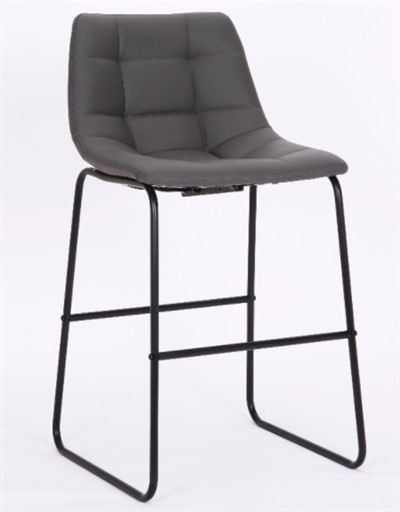
If you’re in the market for a new leisure chair, I urge you to stop guessing at that 18-inch number. Measure your seated knee height, think about how you’ll use the chair, and ask questions when you’re shopping. And if you’re ready to find a chair that’s built to fit you, reach out to our team. We’ll walk you through sizing, test our models, and make sure you get a chair that’s perfect for your home, your body, and your idea of relaxation. We don’t sell chairs that look good on paper—we sell chairs that feel good when you sink into them. And that’s the kind of quality you can count on.
Chair Caster References
- Chaffin, D. B., Andersson, G. B. J., & Martin, B. J. (2006). Occupational Biomechanics (4th ed.). John Wiley & Sons.
- Kapandji, I. A. (1982). The Physiology of the Joints: Volume 3: The Lower Limb (2nd ed.). Churchill Livingstone.
- American National Standards Institute (ANSI). (2018). ANSI/BIFMA X5.1: Office Furnishings—Office Chairs. Business and Institutional Furniture Manufacturers Association.
- International Ergonomics Association (IEA). (2020). Ergonomics Guidelines for Seating in Residential Settings. IEA Press.
Zhejiang Zhenxing Furniture Technology Co., Ltd.
Zhejiang Zhenxing Furniture Technology Co., Ltd. is known as one of the most professional leisure chair manufacturers and suppliers in China. Our factory offers high quality leisure chair made in China with competitive price. Welcome to contact us for wholesale service.
Address: 1905#, Building 1, Financial Center Building, No. 61th South Of Fuyu Road, Lingfeng Street, Dipu town, Anji Country, Zhejiang, China
E-mail: andrew@zhenxingfurniture.com
WebSite: https://www.zxtopfurniture.com/
