If you’ve spent any time working in marine LNG bunkering or fuel gas supply systems (FGSS), you know that filters aren’t just a piece of auxiliary equipment—they’re the unsung heroes keeping operations safe, compliant, and profitable. As a provider specializing in marine LNG bunkering and fuel gas supply systems, I’ve spent thousands of hours on bunkering barges, ship decks, and engine rooms, talking to captains, superintendents, and engineers who’ve lived the nightmare of a clogged filter mid-voyage, or a filter that failed to catch a particle that took out a main engine. Today, I want to break down the non-negotiable requirements for LNG bunkering filters in marine FGSS—stuff that’s not just pulled from a textbook, but earned from years of seeing what works (and what doesn’t) in real-world operations. Marine LNG Bunkering & Fuel Gas Supply Systems
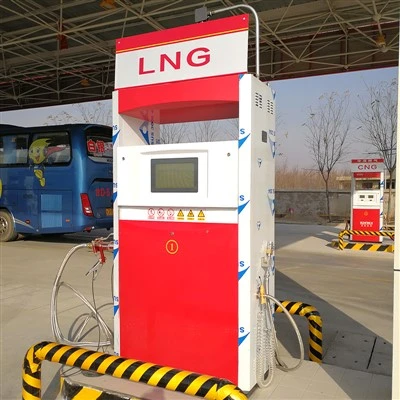
Let’s start with the basics: LNG isn’t your average marine fuel. It’s chilled to roughly -162°C, compressed, and transported as a cryogenic liquid, then vaporized for use as natural gas in ship engines or boilers. The bunkering process itself is a high-stakes, continuous transfer of that cryogenic fluid from a bunkering vessel to a recipient ship, with FGSS handling everything from pressure regulation to vaporization to injection into the engine’s combustion system. Any particulate matter in LNG—whether it’s rust from storage tanks, welding slag from bunkering lines, or frozen moisture that’s turned into ice crystals—can wreak havoc on downstream components: pressure regulators, vaporizers, control valves, and even the engine’s fuel injectors. A single 10-micron particle, for example, can scratch a regulator seat, causing leaks that lead to downtime, or clog a tiny engine injector nozzle, cutting power or even triggering an emergency shutdown. That’s why filters aren’t an afterthought here; they’re a core safety and reliability component.
First on the list is cryogenic compatibility, and no, that’s not just a buzzword. Most standard industrial filters are built for ambient or high-temperature applications, but LNG operates at -162°C. So the filter’s construction materials—filter media, housing gaskets, end caps, fasteners—can’t crack, become brittle, or off-gas when exposed to extreme cold. I’ve seen a poorly selected silicone gasket fail in a filter housing during a bunkering operation at a European port, spilling a small amount of LNG and forcing a 12-hour delay while the system was purged and the gasket replaced. The right materials here? We stick to 316L stainless steel for all wetted components—its low carbon content resists corrosion, and it maintains structural integrity at cryogenic temperatures. For gaskets, we use expanded PTFE (ePTFE), not the old compressed PTFE that can harden or seal improperly when cold. Even the filter media has to be specifically engineered for cryogenic use; glass fiber or polypropylene media can delaminate at -162°C, so we use sintered stainless steel media, which is porous, mechanically strong, and doesn’t shed fibers into the LNG stream.
Next, filtration efficiency and particle retention. This is where a lot of ship operators cut corners, buying cheap filters that claim high micron ratings but don’t actually perform as advertised. The International Maritime Organization (IMO) and the Society for Maritime Petroleum Industry (SMPI) have laid out baseline requirements here, but most operators need to go further to protect their critical assets. For LNG bunkering filters in FGSS, the minimum required efficiency is 99.9% for particles as small as 5 microns, and some high-criticality points—like the inlet to the main engine’s vaporizer—demand 99.99% retention for 1-micron particles. Why the strict rating? LNG bunkering lines can carry particles from upstream storage tanks. For example, a new bunkering tank might have residual construction slag that’s flushed into the first few deliveries, and even a 2-micron particle can damage a precision regulator. It’s also worth noting that micron ratings for filters can be ambiguous if not tested properly; we only source filters that are third-party tested per ISO 16889 (the standard for hydraulic fluid filtration efficiency), because a filter that meets a “nominal” 5-micron rating is far less effective than one with an “absolute” 5-micron rating, which means it will remove 100% of particles 5 microns and larger.
Pressure drop handling is another non-negotiable. During bunkering, LNG is transferred at varying pressures, typically between 5 and 15 bar, depending on the port and the recipient ship’s FGSS design. When a filter traps particles, it restricts flow, which increases pressure drop across the filter element. If the pressure drop gets too high, two bad things happen: first, you slow down the bunkering process, which can lead to demurrage fees (a huge cost for ships sitting idle in port, often running thousands of dollars per hour). Second, excessive pressure drop can damage the filter housing or cause vaporization in the filter housing, since lower pressure on the downstream side can push liquid LNG into vapor. That’s a dangerous scenario because vapor in the liquid stream can cause surge damage to downstream valves and engines. The sweet spot we target for LNG bunkering filters is a maximum pressure drop of 0.2 bar at the design flow rate, with an allowable maximum of 0.5 bar before the filter needs to be replaced. To hit that, we size filters not just for the maximum flow rate of the FGSS, but add a 30% safety margin, and use filter elements with a high dirt-holding capacity—so they can trap more particles before pressure drop spikes, extending their service life and reducing downtime.
Marine-specific durability and compliance round out the technical requirements. These filters aren’t installed in a factory; they’re on ships that roll and pitch in rough seas, exposed to salt spray, humidity, and constant vibration from engines and pumps. That means the filter housing has to be designed for marine environments, with a corrosion-resistant coating (we use a two-part epoxy coating certified for marine use) and a robust mounting system that can handle dynamic loads. Flange connections have to meet ISO 1092-1 standards for marine piping, so they fit seamlessly into existing bunkering lines without modification.
Compliance is non-negotiable too. The IMO’s IGF Code (International Code of Safety for Ships Using Gases or Other Low-Flashpoint Fuels) is the primary regulation governing FGSS and LNG bunkering, and it explicitly requires filtration systems that protect critical components. Beyond that, many major ports—including those in the US, EU, and Singapore—require filters to meet additional local safety standards, like the US Coast Guard’s (USCG) regulations for cryogenic fluid handling. We also make sure our filters are certified by classification societies like DNV, ABS, or LR, because port state control (PSC) inspections will flag uncertified filters as a violation, leading to delays or fines. I’ve seen a ship detained in Rotterdam because its filter didn’t have DNV certification—something that could have been avoided by specifying the right component from the start.
Serviceability and cost-effectiveness are two requirements that get overlooked until it’s too late. Even the best filter is useless if it’s impossible to replace quickly during a bunkering operation. That’s why we design our LNG bunkering filters with quick-release bayonet mounts, not flange connections that require hours of wrenching and purging. We also include pressure differential gauges on every filter housing, so the crew can monitor pressure drop in real time and know exactly when to change the filter, instead of guessing or waiting for a downstream component to fail. That translates to less downtime, faster bunkering, and lower operational costs for our customers. We also offer a range of replaceable elements, so operators don’t have to replace the entire housing every time the filter needs maintenance—cutting their long-term costs by 60% compared to disposable filter systems.
Wait, let’s talk about a common mistake I see: operators buying one-size-fits-all filters for all parts of their FGSS. The filter at the bunkering manifold, where LNG first enters the ship, has different requirements than the filter before the engine vaporizer, or the filter for the recirculation line. The manifold filter is handling large volumes of fluid, so it needs a higher flow rating and larger dirt-holding capacity, while the engine inlet filter needs finer filtration to protect the precision injector components. It’s important to match the filter’s design to its specific location in the system—something that comes from working closely with our customers to map out their FGSS and bunkering processes, not just selling a standard filter off the shelf.
Over the years, we’ve seen first-hand what happens when these requirements aren’t met. A bulk carrier client of ours once used a generic filter in their FGSS during bunkering at a Gulf of Mexico port. A 7-micron particle made it past the filter, scratched a regulator seat, causing a leak that led to an emergency shutdown. The ship had to be towed to a shipyard, resulting in $2.2 million in lost revenue, repair costs, and demurrage fees. Compare that to a container ship we equipped with our custom LNG bunkering filters last year: during an 18-month voyage, they had zero filter-related issues, and their bunkering operations stayed on schedule, avoiding over $500,000 in potential delay costs that they had experienced with their previous filter supplier.
At the end of the day, LNG bunkering filters aren’t a commodity. They’re a critical part of a system that keeps ships safe, compliant, and on schedule—saving operators millions of dollars in downtime, fines, and repair costs. When selecting filters for your FGSS, don’t just look at the upfront price. Ask about cryogenic material testing, third-party efficiency certifications, pressure drop ratings, marine durability, and serviceability. And if you’re working with a supplier that specializes in marine LNG bunkering and fuel gas supply systems like us, they should take the time to understand your specific operations, the ports you call, and the types of LNG you’re handling, to deliver a filter solution that’s tailored to your needs.
If you’re currently reviewing filters for your FGSS or have questions about upgrading your bunkering filtration system, we’re here to help. Our team has decades of experience working with ship operators, bunkering vessels, and port authorities to design, supply, and service filtration systems that meet all the latest requirements. Contact us today to discuss your needs and get a customized solution that keeps your operations safe, compliant, and running smoothly.
Key Components References
ISO 16889:2008, Hydraulic fluid power – Filters – Multi-pass method for evaluating filtration performance of a filter element
International Maritime Organization (IMO), IGF Code (International Code of Safety for Ships Using Gases or Other Low-Flashpoint Fuels), 2015
American Bureau of Shipping (ABS), Guide for LNG Fuel Gas Supply Systems and LNG Bunkering Systems, 2021
Society for Maritime Petroleum Industry (SMPI), LNG Bunkering Best Practices – Equipment and Process Standards, 2022
U.S. Coast Guard (USCG), Regulations for Cryogenic Fuel Handling on Merchant Vessels, 2020
Chengdu Hi-tech Panda Energy Technology Co., Ltd.
With abundant experience, we are one of the most professional marine LNG bunkering & fuel gas supply systems manufacturers in China. Please feel free to buy high quality marine LNG bunkering & fuel gas supply systems for sale here from our factory. Also, customized service is available.
Address: No.1604, 16th Floor, Unit 2, Building 1, No.1700, North Section of Tianfu Avenue, Chengdu High-tech Zone, China (Sichuan) Pilot Free Trade Zone
E-mail: Haikepanda-sos@aliyun.com
WebSite: https://www.haike-energe.com/
