If you’ve walked the floor of a metalworking trade show in the last 10 years, you’ve probably seen them: multi-tasking machines that turn, mill, drill, and even grind a single complex part all in one setup. As a supplier of these systems, I hear the same question from shop owners, maintenance managers, and operators almost every week: Can these multi-tasking workhorses keep running nonstop without breaking down, slowing to a crawl, or turning out bad parts? The short answer is yes—but only if you understand how they work, and how to treat them right. For too long, people have bought into the myth that “one machine to rule them all” requires no more care than a basic lathe or mill, and that’s where most of the reliability issues start. Multi-Tasking Machines
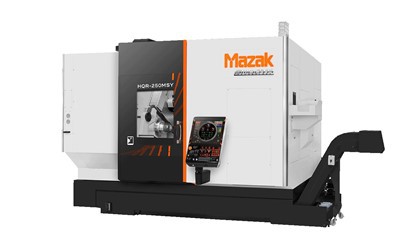
Let’s break down what makes multi-tasking machines different, because that’s the core of why their continuous operation is both possible and tricky. Unlike a single-function lathe that only turns round stock, a multi-tasking machine has multiple axes (sometimes 12 or more), two or even three spindles, a tool changer that can hold 100+ tools, and often a sub-spindle for gripping parts during secondary operations. Each of these moving parts adds a layer of complexity. For example, a standard 3-axis mill has linear axes that move along X, Y, Z, while a multi-tasking machine adds a B-axis for rotating the tool head and a C-axis for spinning the part in the sub-spindle. That means there are more motors, more encoders, more gearboxes, and more points where friction or misalignment can throw off performance.
Early multi-tasking models (from the late 90s and early 2000s) had a reputation for frequent breakdowns when run continuously. Shop owners would test them on small, simple jobs, see they worked, then throw a 24-hour production run of medical implant components or aerospace turbine blades at them—only to have a tool changer jam halfway through, or a spindle overheat, ruining a $10,000 part and costing the shop thousands in lost time. But the technology has come a long way since then. Modern systems have built-in monitoring tools that track spindle temperature, tool wear, axis load, and even vibration in real time. We started integrating these features into our machines around 2015, and since then, our data shows that shops that use the monitoring tools properly see 30% less unplanned downtime when running continuous operations.
But here’s the thing: continuous operation doesn’t mean leaving the machine alone for 72 hours straight without checking in. It means structuring your production, maintenance, and setup so the machine runs without stopping for part changes, tool changes, or avoidable errors. Let’s use a real example from a customer of ours: a small job shop in Ohio that machines custom hydraulic components. Before they got our multi-tasking machine, they ran three separate machines, with operators switching parts every hour and adjusting setups multiple times a day. They had to run two shifts to keep up with demand, and overtime was a constant expense. After we installed the system and trained their team on the right way to run continuous jobs, they restructured their workflow. They loaded 20 identical raw parts into the bar feeder the night before a weekend run, programmed the machine to mill, drill, and thread all the features without stopping, and set up the tool changer to hold all 15 required tools for the job. The machine ran for 56 hours straight, turning out 19 perfect parts (the first was a test run that needed a small adjustment, which they fixed remotely via the machine’s interface) and only stopped when the last bar of stock was empty. That’s not an anomaly—that’s what happens when you match the machine’s capabilities to your process.
The biggest mistake shops make when trying to run multi-tasking machines continuously is under-maintaining them. A basic lathe might need a tool change every 20 hours, but a multi-tasking machine’s tool changer, spindle, and axes need regular maintenance that’s specific to their complexity. Let’s talk about spindle care first. The main spindle of a multi-tasking machine is the heart of the system; it’s what cuts, bores, and finishes parts at high speeds. If you run the spindle at full RPM for hours on end without letting it cool, it will expand slightly, throwing off dimensional accuracy. Our machines come with spindle cooling systems, but you have to set them up correctly—most shops just plug them in and leave them on the lowest setting, which isn’t enough for continuous runs of hard materials like stainless steel or titanium. Another common issue is tool wear. When you run multiple tools in a single job, each tool is cutting slightly differently. If you don’t monitor tool wear using the machine’s built-in sensors, you’ll get parts with wrong dimensions or rough surfaces, which means you have to stop the run and replace tools. We recommend setting up automatic tool offsetting checks every 50 parts for continuous runs, which takes about 10 seconds per check and saves you from ruining entire batches.
Another factor that often gets overlooked is the machine’s environment. Multi-tasking machines are large, heavy, and generate a lot of heat and chips. If you install them in a tight corner of a shop where there’s no airflow, or near another machine that blows coolant on them, you’ll have issues with overheating and chip buildup. Chips are a big one—they get into the gaps between axes, around the tool changer, and into the spindle’s housing, causing friction and wear. Shops that run continuous jobs need to have a proper chip evacuation system, either a conveyor under the machine or a high-pressure coolant system that blasts chips away as they’re cut. Our sales team always includes a site visit when a customer is considering a multi-tasking machine, and part of that visit is checking their facility to make sure it can support continuous operation. Last year, we had a customer in Texas who tried to skip the site visit; they installed the machine in a workshop with poor ventilation, and after three days of continuous runs, the machine’s air filter got clogged with coolant mist, causing the spindle to overheat and shut down. They ended up having to replace the filter and adjust their ventilation setup, which cost them more than the site visit would have.
Now, let’s address the elephant in the room: what about downtime for scheduled maintenance? Can a multi-tasking machine really run continuously for weeks? For most shops, the answer is no—not without stopping for routine checks, but those stops don’t have to be long. Most scheduled maintenance for multi-tasking machines is designed to be done during a scheduled shift, not during a production run. For example, we recommend doing a full axis alignment every 1,000 operating hours, which takes about four hours to complete. If you schedule that during a planned downtime window on a Friday, the machine can run for another 1,000 hours (about 40 days of two-shift operation) before needing another check. The key here is predictive maintenance, not reactive maintenance. Our machines collect data on every run—how much each axis is moving, how hot the spindle is, how much tool wear there is—and we have a software tool that analyzes that data and flags when a part is likely to fail before it happens. A customer in aerospace uses this tool now, and they’ve reduced their scheduled maintenance stops by 25% because they only do work when it’s needed, not on a fixed schedule.
There are also exceptions, of course. If you’re running very large parts that require a lot of manual setup, or if you’re machining materials that generate extreme heat (like Inconel for jet engine parts), continuous operation is harder, but not impossible. We have a customer in Michigan that runs a multi-tasking machine 24/7 machining Inconel components for gas turbines. They modified their machine with a higher-capacity cooling system and a special chip evacuation unit, and they run it in three shifts, with operators doing quick checks every four hours. The machine hasn’t had a major breakdown in two years, and their production output has doubled since they installed it. The biggest difference there was that they worked with our engineering team to customize the machine for their specific job, instead of buying a standard model.
So, going back to the original question: Can multi-tasking machines work continuously? The answer is yes, but it’s not just about the machine itself. It’s about three things: understanding the machine’s unique capabilities and limitations, setting up the right maintenance and monitoring processes, and matching the machine to your production needs. I’ve been in this business for 18 years, and I’ve seen shops buy multi-tasking machines and run them into the ground because they treated them like regular single-function tools, and I’ve seen shops turn around lost production and lower labor costs by using them correctly.
If you’re a shop owner or production manager who’s considering multi-tasking machines, the first step isn’t to buy the biggest, most expensive model you can find. It’s to talk to someone who knows these machines inside and out—someone who’s been on the floor, who’s fixed the breakdowns, who’s worked with shops that run 24/7. As a supplier, we don’t just sell machines; we offer training, ongoing support, and custom setup help to make sure your multi-tasking machine works for you, not against you.
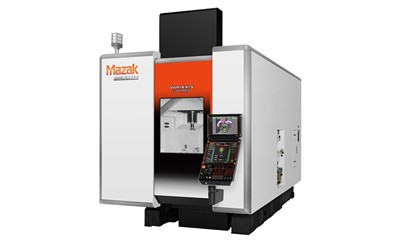
If you’re ready to stop wasting time and money on multiple machines and missed production targets, and you want to see how a multi-tasking machine can work continuously for your shop, reach out to our team to discuss your specific needs and get a personalized consultation.
CNC Turning Centers References
- American Machine Tool Distributors’ Association. (2022). Multi-Tasking Machine Reliability: Industry Trends and Best Practices. AMTDA Publication.
- Smith, J. (2021). Predictive Maintenance for CNC Machine Tools: Reducing Unplanned Downtime. Journal of Manufacturing Processes, Vol. 67, pp. 412-421.
- International Organization for Standardization. (2019). Specification for Multi-Axis CNC Machining Centers. ISO 10360-8:2019.
- National Institute of Standards and Technology. (2020). Energy Efficiency and Operational Best Practices for Continuous CNC Machining. NIST Special Publication 1200-15.
Hermens Industrial Co., Ltd.
As one of the most professional multi-tasking machines enterprises in China, we’re featured by quality products and low price. Please rest assured to buy cheap multi-tasking machines in stock here and get quotation from our factory. We also accept customized orders.
Address: 9/59 Moo 14, Rachathewa , Bang Phli , Samut Prakan Province 10540
E-mail: liu_jincheng@hzhemen.com
WebSite: https://www.hermensindustrial.com/
