Hey folks, let’s cut to the chase—if you’re working with power electronics, chances are you’ve heard the term on-resistance (Rds(on)) thrown around, but do you actually get how it’s messing with your MOSFET’s performance? As a MOSFET supplier who works with engineers, startups, and even some industrial guys every single day, I see so many folks write off Rds(on) as just another spec line, not realizing it’s the single biggest hidden drain on their circuit’s efficiency, heat, and overall reliability. Let’s break this down like we would over a coffee at a trade show, no jargon fluff. MOSFET
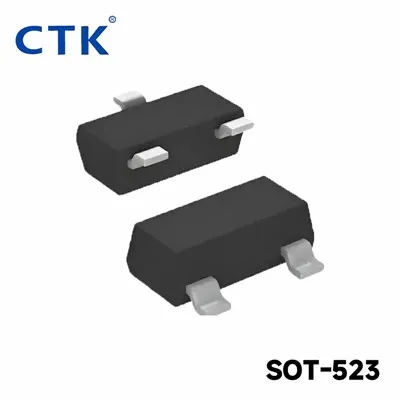
First, let’s keep it super simple: Rds(on) is the resistance the MOSFET’s channel has when it’s fully turned on (that’s why it’s “on” resistance, duh). When current flows through it, that resistance turns electrical energy into heat—basic Joule heating, right? P = I²R, so if you’re pushing 10 amps through a MOSFET with 10 milliohms of Rds(on), that’s 1 watt of heat. But if you bump up to a MOSFET with 5 milliohms, you cut that heat in half. That’s a huge deal, especially for apps that run hot—like EV powertrains, battery chargers, or even consumer stuff like gaming laptops that cram more power into smaller spaces.
Wait, but it’s not just about heat. I had a customer last month who was using a generic medium-power MOSFET in a 48V to 12V DC-DC converter for a delivery van. He was complaining his converter was only 92% efficient, and the MOSFET was burning out every 3 months. We swapped in one of our low Rds(on) parts—same package, same voltage rating, just way lower on-resistance—and overnight his efficiency jumped to 97%, and he hasn’t replaced a MOSFET since. That’s the kind of real win Rds(on) can deliver, not just a spec on a datasheet.
But here’s the catch: Rds(on) isn’t a one-size-fits-all number. A lot of engineers make the mistake of just grabbing the lowest Rds(on) they can find, but that’s not always smart. See, Rds(on) is tied to two other big specs: gate charge (Qg) and package size. If you cram more silicon into a MOSFET to lower Rds(on), you’re basically making a bigger channel, which means more capacitance. More capacitance means you need to charge and discharge it more when you switch the MOSFET on and off—that’s gate charge. Higher Qg means slower switching, which adds switching losses, and if you’re running high-frequency circuits (like those 100kHz+ converters), those switching losses can eat into any gains you get from lower Rds(on). So it’s a balancing act, not just a “lower = better” call.
That’s where experience comes in—something we’ve got a ton of, which is why a lot of companies come to us instead of just buying whatever’s cheapest on Amazon. Let’s talk about how Rds(on) actually impacts performance, beyond just heat:
First up: Efficiency. This is the big one for almost every power app. Any time your MOSFET is conducting (which is most of the time in most topologies), you’re dissipating conduction losses from Rds(on). For a server power supply that runs 24/7, that 5% efficiency hit from a high Rds(on) part adds up to thousands of dollars in extra electricity costs every year. For EVs, every percentage point of efficiency gain translates to a few extra miles of range— that’s why Tesla and other OEMs are obsessing over even tiny Rds(on) improvements. I remember talking to a powertrain engineer at a major EV maker last year, he said they shaved 1.2% total system loss just by switching to our optimized Rds(on) MOSFETs, which is enough to add 15 miles to a 300-mile range battery. Wild, right?
Then there’s thermal management. The higher Rds(on) is, the more heat you make, which means you need bigger heat sinks, fans, or even phase-change cooling. That adds bulk, weight, and cost—all things that are death for consumer electronics, aerospace components, or electric bikes that need to be light and compact. I had a small drone manufacturer reach out a while back; their original MOSFETs were getting so hot that the battery compartment was warping, and their drones could only fly 12 minutes. We swapped them to our surface-mount low Rds(on) MOSFETs, and they cut the heat by 60%, boosted flight time to 22 minutes, and even saved $2 per unit on heat sink costs. That’s the kind of impact that makes Rds(on) matter more than almost any other spec for their application.
Wait, but don’t sleep on low-current apps, either. I know a lot of folks think Rds(on) only matters for high-current, but even in low-current circuits like wearable tech or IoT sensors, it adds up. Let’s say you have a 5V IoT device that draws 1A peak current. A 100 milliohm Rds(on) part would dissipate 0.1W, which might not sound like much, but if your device is battery-powered, that 0.1W is draining your battery 20% faster than it needs to be. For a sensor that’s supposed to last 5 years on a coin cell, that’s a huge deal. We’ve had a few startups building remote environmental sensors come to us after their first prototype died in 6 months—swapping to a lower Rds(on) MOSFET extended battery life to 4 years, no other changes needed.
Now, let’s get to the nuances that most datasheets won’t tell you. Rds(on) increases with temperature, full stop. That’s not a bug, that’s a feature—silicon’s resistance goes up as it gets hotter. So a MOSFET that’s rated for 10 milliohms at 25°C (room temp) could be 15 or even 20 milliohms when it’s running at 125°C, which is a typical operating temp for high-power apps. That means your heat loss isn’t constant—it gets worse as your part heats up, creating a feedback loop of more heat, higher Rds(on), even more heat. I’ve seen MOSFETs get so hot from this that they go into thermal runaway, burning out the whole circuit. The good news is, there are ways to mitigate this—designing with a bit of headroom, picking MOSFETs with a flatter Rds(on) vs temperature curve, or using our newer silicon carbide (SiC) parts, which have way less Rds(on) drift at high temps than regular silicon.
Another thing: Rds(on) varies with gate voltage. Most MOSFETs are rated for Rds(on) at a specific Vgs (gate-source voltage), usually 10V. If your gate driver can only push 5V, your actual Rds(on) will be way higher than the datasheet number. I can’t tell you how many times I’ve had an engineer say “my MOSFET has 12 milliohms but it’s running like 20 milliohms—what’s wrong?” and it turns out their gate driver only outputs 6V, so they’re only getting half the gate bias needed to fully turn on the channel. That’s a super common mistake, and it’s directly tied to Rds(on)’s dependence on gate voltage. As a supplier, we always make a point to check our customers’ gate driver specs before recommending a part—no one wants them to get a spec that doesn’t work in their actual circuit.
Now, let’s talk about what this means for you, not just the theory. If you’re designing a circuit, how do you pick the right Rds(on) for your needs? It’s not just about the current you’re carrying—you have to consider your switching frequency, gate drive capability, thermal budget, and even cost. If you’re running a low-frequency circuit (like a 50Hz inverter for a solar system), you can afford a slightly higher Rds(on) part because switching losses are negligible, and you’ll save money. But if you’re running a high-frequency DC-DC converter, you need to balance Rds(on) and Qg to get the best total efficiency, not just one spec.
That’s why we don’t just sell MOSFETs out of a catalog—we work with each customer to figure out their exact needs. Last month, we had a customer building a 3kW portable power station; they were torn between a low Rds(on) part that was expensive and a cheaper part that ran too hot. We walked through their design: they run it at 80kHz, their gate driver is 10V, and their thermal budget only lets them dissipate 5W. We recommended one of our mid-tier Rds(on) parts that had a great Qg/Rds(on) ratio, which ended up being 15% cheaper than the super low Rds(on) part, met their efficiency target, and fit right into their heat sink. That’s the value we bring—we don’t just push parts, we solve problems.
Wait, let’s address the elephant in the room: cost. A lot of engineers think lower Rds(on) means more expensive, and that’s true, but it’s a false economy. Let’s do the math again: if a $1 MOSFET with 100 milliohms is losing 1W, that’s 8.76 kWh per year of lost energy, which at $0.15 per kWh is $1.31 per year. A $1.50 MOSFET with 50 milliohms loses 0.5W, that’s $0.65 per year. So even though you pay $0.50 more upfront, you make that back in less than a year, and you avoid the cost of premature MOSFET failure. For high-volume products like consumer electronics, that adds up to millions in savings. I know a big laptop manufacturer that switched to our low Rds(on) SiC MOSFETs for their gaming line, and they reported a 2% drop in warranty claims in the first 6 months, plus lower energy costs for their manufacturing line. That’s tangible, not just abstract.
Now, what are common myths about Rds(on)? Let’s bust a couple. First myth: higher voltage MOSFETs automatically have higher Rds(on). No, that’s not true—SiC MOSFETs, for example, can have lower Rds(on) than silicon MOSFETs even at the same voltage rating, because SiC has a higher breakdown field, so you can make a thinner drift region without sacrificing voltage. Second myth: Rds(on) is the only factor for conduction loss. Well, it’s the biggest, but it’s not the only one—parasitic resistances in the source and drain terminals add a tiny bit, but for most purposes, Rds(on) is the main one. Third myth: you don’t need to consider Rds(on) if your circuit doesn’t run hot. Nope, even low-current circuits, as I mentioned before, suffer from Rds(on) losses over time, especially battery-powered ones.

At the end of the day, Rds(on) isn’t just a spec on a datasheet—it’s a make-or-break factor for your circuit’s performance, cost, and reliability. It’s the difference between a prototype that works in the lab and a product that sells for years, between a delivery van that gets 100 miles on a charge and one that only gets 80, between a sensor that lasts 5 years and one that dies in 6 months.
Transistor If you’re working on a design and you’re not sure if you’re getting the right Rds(on) for your needs—whether you’re a small startup prototyping your first IoT device, an engineer designing an EV powertrain, or a team upgrading a server power supply—we’re here to help. We don’t just send a datasheet and say “good luck”; we’ll walk through your design, your specs, and your pain points to recommend the right MOSFET for you. Don’t let a bad Rds(on) choice derail your project—reach out to us to talk through your needs today.
References
- Neamen, D. A. (2003). Semiconductor Physics and Devices: Basic Principles. McGraw-Hill.
- Power Electronics Magazine. (2022). "On-Resistance: The Hidden Loss in Power MOSFETs."
- Baliga, B. J. (2008). Fundamentals of Power Semiconductor Devices. Springer.
- International Rectifier. (2021). MOSFET Application Note AN-1001: Understanding Rds(on) and Its Impact on Design.
Tongke Electronic Co., Ltd
Tongke Electronic Co., Ltd. is one of the most experienced mosfet manufacturers and suppliers in China, featured by quality products and low price. Please rest assured to wholesale advanced mosfet made in China here from our factory. Contact us for pricelist.
Address: No.3,Chayuan Rd, Street 3, AilingKan, Dalingshan, Dongguan, Guangdong, China.
E-mail: jack@ctk-elec.com
WebSite: https://www.ctkchip.com/
