What’s the Sorting Principle of a Vibrating Sorter? (A Guide from Someone Who Sells Them) Vibrating Sorters
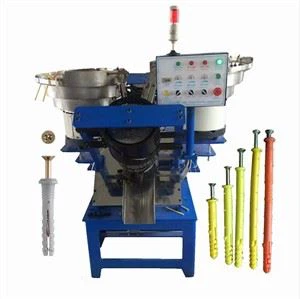
Let me cut to the chase—if you’ve ever stood next to a vibrating sorter in action, you’ve probably stared at it like, “How does that chaotic shake turn a pile of mixed, messy stuff into neat, separated groups? It just looks like it’s vibing too hard!” I get it. When I first started working with these machines (full transparency, I’m with a company that makes and sells them—don’t @ me), I thought it was all just “magic and motors.” Turned out? It’s way more specific than that. It’s not just shaking things; it’s a carefully balanced dance of vibration physics, material properties, and smart design that makes even the weirdest mixed stuff sort itself out fast. Let me break this down without the jargon overload, promise.
First, let’s get one thing straight: vibrating sorters don’t work the same way for every material. If you’re sorting small grain, for example, that’s way different than sorting tiny plastic pellets, or even irregular shaped little parts like rubber gaskets or metal bolts. But the core principle across all of them is this: controlled vibration + gravity + the right surface design = separation based on size, shape, weight, or even density. Let’s unpack the three big parts that make this work, because that’s where most people miss the nuance.
Number one, the vibration itself—this isn’t just a random shake. The sorter has two or more eccentric weights mounted on the motor shafts, right? When the motor spins, those weights create centrifugal force that pushes the whole sorting deck in a specific direction, usually an elliptical or linear motion (linear is super common for food processing, pharmaceuticals, recycling). Here’s the key detail: the frequency and amplitude (how big the shake is) are calibrated exactly for the material you’re sorting. Like, if you’re dealing with fluffy wheat germ, you don’t crank the vibration super high—you might break down the light, valuable germ before you separate it. But if you’re sorting heavy, irregular metal chips, you need a higher frequency to jostle the big ones loose from the small shavings. I’ve seen customers mess this up first—they just turn the vibration up to max because they think more shake = faster sort, and then they end up with half the product broken or mixed worse than before. Oops. That’s where our team comes in—we help them dial in that setting before they even run the machine.
Number two, gravity is the unsung hero here. The sorting deck is tilted slightly—usually 1 to 5 degrees, depending on the application—so when the machine vibrates, the materials don’t just fly all over the place. They move steadily toward the discharge end, right? But here’s where it gets clever: the jostling makes different materials settle into layers. Heavier, larger, denser particles sink toward the bottom of the pile, and lighter, smaller ones float to the top. That’s called granular convection, or sometimes the “Brazil nut effect”—you know, when you shake a bag of mixed nuts, the big Brazil nuts end up on top? Yeah, that’s exactly what’s happening here, just on a controlled scale. Now, depending on the deck design, there’s usually a grid of small holes along the deck, sized specifically for the smaller particles. The top layer of small, light stuff works its way through the holes as it vibrates, dropping down to a lower conveyor or bin, while the larger, heavier stuff that sank to the bottom stays on the deck until it reaches the end and gets discharged separately. For recycling plants, this is huge—they can separate plastic bottles from aluminum cans, even if they’re the same general size, because aluminum is denser, so it sinks lower and drops through slightly different holes or gets separated by a secondary air flow (wait, I forgot air flow! That’s the third piece for some materials).
Oh right, air flow is for super light materials that the vibration alone can’t budge. Like, if you’re sorting plastic flakes with tiny bits of paper stuck to them, or separating rice from chaff, the sorter has small, adjustable air nozzles under the deck that blow upward. The light chaff or paper gets carried away by the air, while the heavier rice or plastic flakes stay on the deck. We’ve had a lot of agricultural clients ask for this add-on, because traditional sorting methods are way slower and more labor-intensive.
Wait, let’s talk about a real example to make this less abstract. Last quarter, we sold a linear vibrating sorter to a snack food company that was having a problem with mixed pretzel sizes—too many broken pretzel pieces in the bulk packs, and they were wasting a ton of money on sorting by hand. We customized their machine with three different size grades: large, medium, and small, plus a fourth bin for the tiny broken bits. We adjusted the vibration frequency to be gentle enough that it didn’t snap the pretzels, tilted the deck just enough to move the product through without sticking, and set the hole sizes so only the small broken bits dropped through. It cut their manual sorting labor by 80% and reduced waste by almost 25% in the first month. That’s the kind of thing that makes this all make sense—this isn’t just lab theory, it’s fixing real problems for actual businesses.
Now, what about shape? Because not all sorting is just size. For example, if you’re sorting small rubber O-rings that have a lot of irregular, off-cut pieces mixed in, size alone isn’t enough—an off-cut might be the same diameter as a good O-ring but thinner, or have a weird shape that makes it stick in a hole it shouldn’t. So for applications like this, we use vibrating sorters with slotted holes instead of round ones. The O-rings are round, so they don’t fit into the narrow slots, but the thin off-cut pieces are flat enough to slide into the slots and drop through. That’s a tweak to the deck design that makes all the difference—we don’t just sell a one-size-fits-all machine; we adjust the deck, vibration settings, even the air flow to match exactly what the customer needs to sort. A lot of our competitors just push a generic machine and say “it’ll work,” but we spend time walking through their process to make sure it’s right.
Let’s address some common myths, too, because I get asked these all the time. First myth: “Vibrating sorters are too violent for fragile products.” No, they’re not—if you calibrate the vibration correctly. We have clients sorting things like fresh blueberries, and the machine is set to such a gentle frequency that the blueberries don’t bruise at all, but the small twigs and underripe berries get separated out. Second myth: “They’re only for big industries.” Nope—we sell small, tabletop vibrating sorters to craft businesses, like people who make custom jewelry parts or specialty coffee beans. They’re not just for factories with 100 workers. Third myth: “They take forever to set up.” With our machines, most standard setups take less than an hour, and we include a quick-start guide, plus we’re just a call away if someone runs into a problem. No waiting for a technician for days.
Here’s the thing that a lot of people don’t realize about how these machines work: it’s not just the parts of the sorter itself—it’s how the material interacts with each part. If the surface of the sorting deck is too smooth, the materials slide too fast and don’t separate. If it’s too rough, the product gets stuck. That’s why we use different deck materials—polyurethane for sticky or abrasive materials, stainless steel for food or pharmaceutical applications, even rubber for products that need extra gentle handling. It’s all tailored.
I’ll be honest, when I first got into this business, I thought sorting was a solved problem. Like, how hard can it be to separate stuff? But I’ve seen so many different use cases that make me realize how much goes into getting it right. A recycling plant sorting e-waste components needs to separate tiny copper wires from plastic bits, while a toy manufacturer needs to sort different plastic parts to make sure each product has the right components. Both use vibrating sorters, but the settings, deck design, and even the vibration direction are totally different. That’s the part that keeps it interesting—every customer’s problem is a little unique, and we get to build a solution that fits.
If you’re someone who’s dealing with messy, mixed product that’s costing you time or money, maybe this is the kind of machine you need. Maybe you’ve tried other sorting methods that weren’t fast enough, or too inaccurate, or too labor-heavy. I can’t promise a magic fix, but I can promise that we’ll walk through your needs, explain exactly how the sorter would work for your materials, and make sure you get something that doesn’t just sort things, but makes your process easier.
At the end of the day, the sorting principle of a vibrating sorter boils down to control. You control the vibration so it’s not too hard or too soft, control the deck design for your product, control the air flow if you need it, and let gravity and physics do the rest. No magic, just smart, calibrated design that turns chaos into order.

If you’re curious to learn more, or want to chat about what you need to sort, don’t hesitate to reach out. We’re here to answer questions, no pressure, just help you find a solution that works for your business. No generic sales pitches, just real talk from people who know these machines inside and out.
Customized Riveting Machine References
- Food and Agriculture Organization of the United Nations. (2020). Post-Harvest Sorting Technologies for Small-Scale Agricultural Producers. Rome: FAO Publishing.
- American Society of Mechanical Engineers. (2019). Vibratory Conveying and Sorting Equipment Design Standards. New York: ASME International.
- Recycling Industry Manufacturing Association. (2021). Best Practices for Material Separation Using Vibratory Sorters. Washington, D.C.: RIMA Publications.
- Industrial Physics Journal. (2018). Granular Convection in Linear Vibratory Sorters: Effects of Frequency and Amplitude. Volume 47, Issue 2, pp. 112–121.
Ruian Hensen Automatic Machinery Co., Ltd.
Ruian Hensen Automatic Machinery Co., Ltd. is well-known as one of the leading vibrating sorters manufacturers and suppliers in China, featured by quality products and good price. Please feel free to buy customized vibrating sorters made in China here from our factory. Contact us for quotation.
Address: No.199, 3rd Kaifa road, Dongshan industrial area, Ruian, Zhejiang China
E-mail: ymy3562@vip.163.com
WebSite: https://www.hensen-machine.com/
