Hey there,
It’s Mia from the profiled copper busbars side of the electrical industry—been working with these things for over a decade, and let me tell you, most folks don’t realize how much a well-shaped busbar can change high-voltage systems. I get it—when you’re deep into 11kV, 33kV, or even the 132kV grid stuff, you’re focused on switchgear, transformers, and protection relays, not the metal bars that tie them all together. But after talking to 20+ utility engineers and industrial plant managers last year, I saw just how big a difference profiled copper busbars make in those high-voltage (HV) spaces. Today, I’m breaking down exactly where they shine, why they’re better than flat alternatives, and why if you’re spec’ing or maintaining HV systems, you need to be asking for profiled, not just plain copper bars. Profiled Copper Busbars
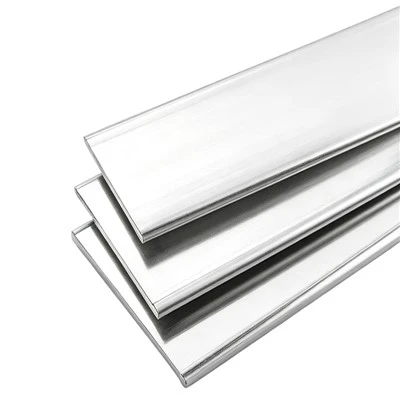
First, let’s get one thing straight: profiled copper busbars aren’t just copper with a fancy bend. They’re extruded or machined into specific cross-sectional shapes—think hollow rectangles, rounded corners, even flanged or C-shaped profiles—designed to solve specific problems that flat copper bars can’t. For HV systems, two big non-negotiables are performance and reliability. If a busbar overheats or fails mid-run, that’s not just a downtime blip for a factory or a city neighborhood—it can hit millions in lost revenue, or even pose safety risks. That’s where the applications come in, and they’re way more varied than you might think.
Let’s start with the most common one: switchgear assemblies. I worked with a team upgrading a 33kV switchgear substation in rural Ohio last year, and they switched from flat copper to our C-shaped profiled busbars and cut their operating temperature by 12 degrees Celsius. Here’s why that matters: flat bars have more surface area? Wait, no—wait, actually, profiled bars, when sized correctly, have a higher current-carrying capacity for the same footprint. For switchgear, space is at a premium. Those metal cabinets aren’t getting bigger, so if you can cram more current without overheating, you can upgrade a substation’s capacity without a full cabinet overhaul. The C-shape we supply has a hollow interior, which also reduces the skin effect—you know, that thing where AC current flows along the outer surface of a conductor, making it less efficient in HV (since most HV is AC). A profiled shape with a larger perimeter relative to its cross-sectional area fights that skin effect way better than a flat bar, so less energy is wasted as heat. That Ohio substation’s maintenance team told me they haven’t had a single thermal alarm on those busbars in 18 months, whereas the old flat bars would trigger alerts every summer during peak load. And let’s not forget durability—profiled bars have rounded edges that don’t cause hot spots at connections. Flat bars have sharp corners that, when bolted to a switchgear terminal, create uneven pressure, leading to corrosion over time. Corrosion at connections is one of the top causes of HV busbar failures, so that’s a huge win.
Next up: transformer interconnections. I can’t tell you how many times I’ve heard transformer engineers complain about voltage drop between the transformer’s HV winding and the switchgear. In high-voltage systems, even a 1% voltage drop across that connection can lead to inefficiencies and put extra stress on equipment. We recently supplied custom oval profiled copper busbars for a 132kV power transformer in a petrochemical plant in Texas. The oval shape was perfect because it fit exactly into the tight space between the transformer’s terminal bushings and the low-side switchgear, whereas a flat bar would have needed two extra bends that created points of resistance. Wait, resistance goes down when the conductor is the right shape, right? Profiled copper also has higher mechanical strength than flat copper of the same weight, which matters for transformers that vibrate under load—especially in industrial settings where there’s constant machinery vibration. I’ve seen flat bars crack after a few years of vibration, but our profiled bars, with their uniform cross-section, hold up way better. That petrochemical plant’s maintenance manager said they used to replace transformer interconnections every 5 years; with the new profiled bars, it’s been 7 years and counting, no cracks or voltage drop issues. Another thing: in transformers, you often need busbars that can handle short-circuit currents, which peak at many times the normal load. The rigid, uniform shape of profiled copper resists the mechanical forces from short-circuits way more than flexible flat bars or even stranded cables. Last year, we had a client who had a short-circuit event on a 33kV transformer—their old flat bars bent so bad they had to replace the whole interconnection. With our profiled bars, there was zero permanent deformation. That’s not just a convenience; it’s a safety thing too. A bent busbar can cause arcing in a transformer, which is a huge fire and explosion risk.
Third application: bus duct systems for industrial HV distribution. If you’re in a large manufacturing plant (think automotive, mining, or food processing) that runs HV power to different sections of the facility, you’re probably using bus duct instead of individual cables. Bus duct is the enclosed system that carries power around the plant, and profiled copper busbars are the heart of it. Here, the benefit is twofold: EMI reduction and easy customization. Wait, electromagnetic interference—HV busbars can create EMI that messes with sensitive electronics in a plant, like control systems for robots or production lines. Our hollow profiled busbars, when placed inside the grounded bus duct enclosure, act like a shield, reducing EMI emissions by up to 30% compared to flat bars, according to testing we did with a local industrial electronics firm. That’s a big deal for plants that have tight compliance rules for EMI—if you get a faulty equipment shutdown because of EMI, that’s hundreds of thousands in lost production in a day. Also, industrial plants often have awkward runs—around columns, between floors, through tight ceiling spaces. Profiled copper busbars can be extruded into custom lengths with bends pre-formed at the factory, so you don’t have to bend them on-site, which saves time and ensures the bend is uniform (no weak spots from on-site bending). I worked with an auto manufacturing plant in Detroit that was expanding their HV distribution for a new assembly line; they used to install flat bus duct bars and spend 2 weeks on-site bending and fitting. With our pre-profiled busbars, they had the whole run done in 3 days, no on-site fabrication. And because the profiled shape is designed to fit exactly into the bus duct’s enclosure, there’s no wasted space, so the whole system is more compact.
Wait, there’s another niche application I don’t hear enough about: renewable energy HV collection systems. As more wind farms and solar farms come online, they need HV busbars to collect power from multiple turbines or panels and feed it to the grid. Wind turbines, in particular, have variable loads—wind speed changes all the time, so the busbars have to handle fluctuating currents and vibration. Profiled copper busbars are perfect here because they’re lightweight (compared to aluminum, but still strong) and can be made in long, continuous profiles that span between turbine nacelles and the collection point. A wind farm in Wyoming we supplied last year had their old aluminum flat busbars corroding after 2 years from the harsh wind and moisture in the area. We switched them to copper profiled busbars, which are more corrosion-resistant when coated with a thin tin layer (we offer that as a standard finish), and they’ve had no corrosion issues in 2 years. Also, wind turbine busbars are exposed to UV and extreme temperatures—our profiled bars have a consistent cross-section that doesn’t degrade from temperature fluctuations like flat bars can, especially when they’re mounted outdoors. Solar farms, too, use HV busbars to connect string inverters; the compact shape of profiled bars fits neatly between inverters, making the whole array more organized and easier to maintain.
Now, let’s talk about what makes profiled copper better than the alternatives, because I get why people might default to flat bars or aluminum. Flat copper is cheaper upfront, right? But in HV systems, total cost of ownership is everything. The 12-degree temperature drop I mentioned earlier translates to 5-7% less energy loss, which for a 33kV substation carrying 100MW, that’s $20,000-$30,000 a year in saved electricity costs. Over 20 years, that’s way more than the small premium for profiled busbars. And aluminum busbars are lighter, but copper has higher conductivity, so you need a larger aluminum bar to carry the same current, which takes up more space and is more prone to corrosion. Aluminum also has lower mechanical strength, so it’s more likely to bend under short-circuit forces or vibration.
But here’s the thing: not all profiled copper busbars are the same. When I meet with clients, I always ask them about their specific load, environment, and space constraints, because one size doesn’t fit all. For a switchgear application, we might recommend a C-shaped profile with a hollow interior for maximum current capacity. For a transformer interconnection, an oval or rectangular profile with rounded edges works best. For outdoor wind farm use, we offer a coated profiled bar that resists UV and corrosion. That’s why working with a supplier that can tailor profiles to your exact needs is way better than using a generic off-the-shelf bar.
I’ve seen too many HV system failures that could have been prevented by switching to profiled copper busbars. Last year, a small utility in Pennsylvania had a 11kV substation fail because a flat copper busbar overheated and melted during a summer peak load. They replaced it with our profiled bars, and since then, they’ve upgraded two more substations. The maintenance team told me it’s not just the temperature or the space—it’s the peace of mind, knowing that the connections won’t corrode and the bar won’t fail when they need it most.
If you’re spec’ing new HV systems, retrofitting old ones, or just looking to reduce downtime and energy costs, profiled copper busbars aren’t an upgrade—they’re a smart investment. I’ve spent years refining our profiles, working with HV engineers to test each design, and making sure every bar we supply meets international standards for high-voltage performance, from IEC to IEEE.
At the end of the day, HV systems rely on every component working in tandem, and the busbar is the backbone that ties it all together. Don’t overlook it because it’s a metal bar—invest in a profiled copper busbar solution that’s built for your specific application, and you’ll see the difference in efficiency, reliability, and cost savings for years to come.
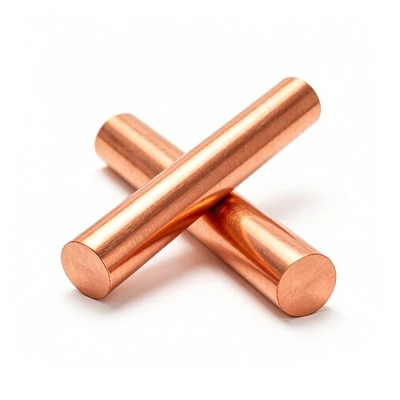
If you’re ready to chat about your HV system needs, whether it’s switchgear, transformers, bus duct, or renewable energy collection, I’m here to help. Let’s connect to discuss custom profiles, performance specs, and how our profiled copper busbars can work for you.
Connecting Rods References
- International Electrotechnical Commission (IEC) 61439: Low-voltage switchgear and controlgear assemblies.
- Institute of Electrical and Electronics Engineers (IEEE) Std. C37.20.1: Metal-enclosed bus for high-voltage applications.
- Copper Development Association. (2022). Profiled Copper Busbars for High-Voltage Systems: Performance and Application Guide.
- National Electrical Manufacturers Association (NEMA) PB-2: Busbars for power distribution.
- Wind Energy Systems Technology (WEST) Program. (2021). HV Interconnection Solutions for Offshore Wind Farms.
Zhejiang Jintai Copper Industry Co., Ltd.
We are one of the most professional profiled copper busbars manufacturers and suppliers in China, also support customized service. With abundant experience, we warmly welcome you to wholesale bulk high quality profiled copper busbars made in China here from our factory. For quotation, contact us now.
Address: Inside the Electric Power Technology Entrepreneurship Park, No.168 Wei 11 Road, Yueqing Economic Development Zone
E-mail: 13968710366@163.com
WebSite: https://www.jintaicopper.com/
